
Anyone planning a renovation, a new villa fit-out, or a commercial refurbishment eventually asks the same question: what does interior design actually cost in this city? It’s a fair question, and it’s harder to answer than most price lists suggest. Interior Design Dubai projects vary enormously in cost because no two spaces, briefs, or material specifications are the same. A one-bedroom apartment refresh in Business Bay and a full villa transformation in Al Barari sit at completely different ends of the budget spectrum, even though both fall under the same broad service category.
This guide breaks down what actually drives interior design pricing in Dubai, what homeowners and businesses typically pay across different property types, and where the real savings (and real risks) tend to hide. Whether you’re an architect scoping a client brief, a developer pricing out show units, or a homeowner comparing quotes, understanding the cost structure will help you make better decisions before signing anything.
Why Interior Design Costs Vary So Much in Dubai
Dubai’s interior design market is unusually broad. It spans budget-conscious rental apartments, mid-range family villas, and ultra-luxury penthouses with imported stone and bespoke joinery. That range alone explains why a single “average cost” figure is almost meaningless without context.
Several factors consistently shape the final number:
- Property size and layout complexity. Open-plan layouts with fewer walls are generally cheaper to design and fit out than compartmentalised spaces with multiple rooms, each requiring its own material palette and detailing.
- Scope of work. A design-only package (concept, drawings, and specifications) costs far less than a full design-and-build package that includes construction, joinery, and finishing.
- Material specification. Porcelain tiles versus natural marble, laminate versus solid wood veneer, standard paint versus decorative Venetian plaster — material choice alone can shift a budget by 30% or more.
- Level of customisation. Off-the-shelf furniture and fixtures cost less than bespoke joinery, custom lighting, or made-to-measure cabinetry.
- Location within the UAE. Prime addresses in Dubai and Abu Dhabi typically carry higher labour and logistics costs than developments in more accessible areas.
Because of this, professional interior design services are usually priced per square foot for design work and per line item for construction and finishing, rather than as a flat package.
Typical Interior Design Cost Ranges by Property Type
While every quote should be treated as project-specific, the ranges below reflect what’s commonly seen across the Dubai market for combined design and fit-out work. These are indicative only and should never replace a proper site assessment and detailed quotation.
Apartments (1–3 bedrooms): Mid-range interior fit-outs for apartments typically involve kitchen and bathroom upgrades, flooring, wall finishes, and joinery such as wardrobes and TV units. Costs scale with the extent of structural changes required — a cosmetic refresh costs considerably less than a full strip-out and rebuild.
Villas: Villa projects introduce more surface area, more rooms with distinct functions, and often outdoor or semi-outdoor spaces that need their own design treatment. Full villa fit-outs, including joinery, ceilings, flooring, and painting across every room, represent one of the larger residential project categories in the market.
Office and commercial spaces: Commercial interior design pricing depends heavily on whether the space needs MEP work, partitioning, acoustic treatment, and workstation joinery, or whether it’s a lighter cosmetic upgrade. Reception areas and client-facing zones typically receive a higher material spec than back-of-house areas, which affects the blended cost per square foot.
Retail, hospitality, and F&B: These projects usually carry the highest cost per square foot because they combine branding requirements, specialised lighting, durable finishes built for high footfall, and often tighter handover timelines.
Design Fees vs Fit-Out Costs: Understanding the Split
One area that frequently confuses clients is the difference between design fees and construction costs. Some firms quote a design fee as a percentage of the total project value; others quote a flat fee for concept development and 3D visualisation, separate from the build.
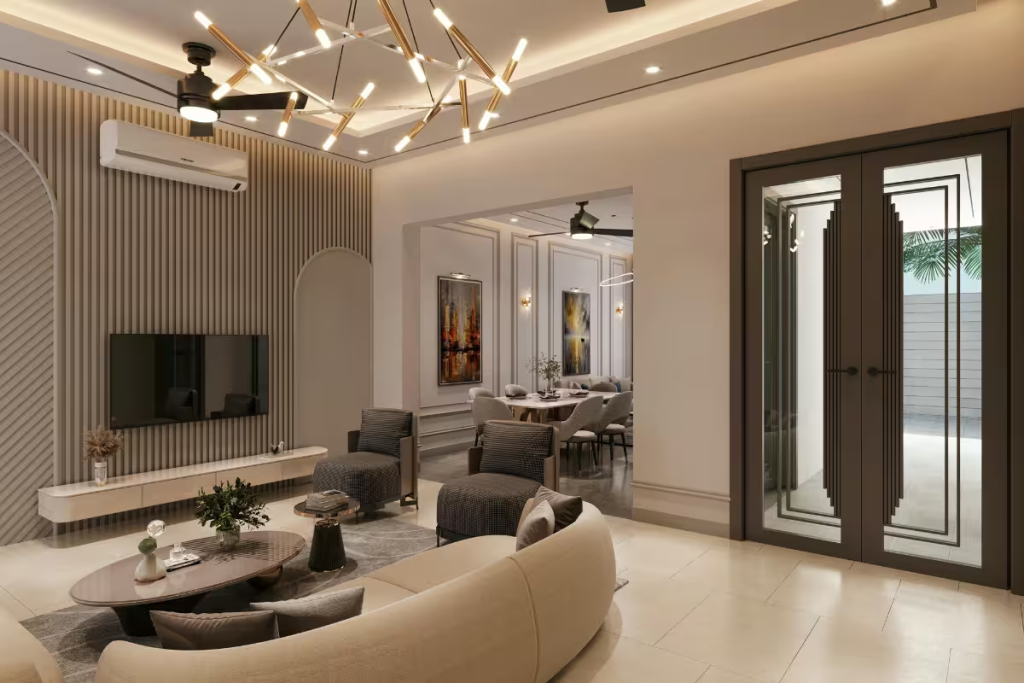
This is where Interior Design & 3D Visualization work earns its place in the budget rather than being treated as an optional extra. Producing detailed 3D interior rendering at the design stage lets a client see exact finishes, lighting, and furniture placement before a single wall is touched. Revisions made on-screen cost a fraction of revisions made after materials have already been ordered or installed. For architects and developers managing multiple units, this stage also gives stakeholders a shared, accurate reference point instead of relying on drawings alone.
Firms that operate as 3D visualisation experts alongside their design and build teams tend to reduce costly surprises later in the project, simply because the client has already approved a realistic preview of the finished space.
Where the Hidden Costs Usually Sit
Quotes that look unusually low often exclude items that surface later as “additional scope.” Before comparing prices, it’s worth checking whether a quotation includes:
- MEP (mechanical, electrical, plumbing) adjustments required for new layouts
- Approvals and NOCs where structural or MEP changes are involved
- Snagging and defect rectification after handover
- Furniture, loose accessories, and styling (often quoted separately from fit-out)
- Project management and site supervision fees
A transparent quote itemises these clearly rather than folding them into vague lump-sum figures. This is one of the clearest signals of working with professional interior design services rather than an informal setup — the paperwork reflects the actual scope, not just the headline number.
How to Get an Accurate Quote
Ballpark figures are useful for early budgeting, but an accurate number only comes from a proper site visit, a clear brief, and a detailed specification list. A few steps make this process smoother for both sides:
- Define the scope early. Decide whether you need design only, design and build, or a full turnkey service before requesting quotes.
- Share reference images or a mood board. This narrows the material conversation and reduces back-and-forth during costing.
- Ask for a breakdown, not a total. A detailed quote separates design fees, materials, labour, and project management, so you can see exactly where the budget goes.
- Request a 3D visualisation before final sign-off. Approving a rendered version of the space avoids expensive changes once construction has started.
- Clarify the payment schedule against project milestones. Payments tied to completed stages, rather than large upfront sums, protect both the client and the contractor.
Getting the Right Partner for the Job
Cost is only one part of the decision. The bigger question is whether the team quoting the project can actually deliver it — on time, to specification, and without a chain of subcontractors diluting accountability along the way. Architects, developers, and homeowners alike tend to get better outcomes when design, visualisation, and construction sit under one roof, because it removes the handoff gaps where budgets and timelines usually slip.
Elegant Fit-Out works across residential, commercial, and hospitality projects throughout Dubai and the wider UAE, handling design, 3D interior rendering, and construction as one accountable process rather than separate stages managed by different parties. If you’re planning a project and want a realistic, itemised quote based on your actual space and brief, get in touch with the Elegant Fit-Out team for a consultation and a detailed cost breakdown tailored to your requirements.
Frequently Asked Questions
1. What is the average cost of interior design in Dubai? There is no single average, since costs depend on property type, size, material specification, and whether the project includes construction or design only. A proper quote requires a site assessment and a defined brief.
2. Is 3D visualisation included in the interior design cost, or charged separately? This varies by firm. Some include 3D interior rendering within the design fee; others charge it as a distinct service. It’s worth confirming this upfront, since visualising the space before construction typically prevents far more expensive changes later.
3. How can I reduce my interior design budget without compromising quality? Focus spend on high-visibility areas (living rooms, kitchens, reception spaces) and choose more cost-effective materials for less prominent zones. A detailed, itemised quote makes it easier to identify where trims are possible.
4. Do commercial fit-outs cost more than residential ones? Not always. It depends on scope. Commercial projects often include MEP and partitioning work that residential projects don’t, but a high-spec villa can easily exceed the cost of a simple office fit-out.
5. How long does it take to get an accurate interior design quote in Dubai? Most reputable firms will arrange a site visit and return a detailed quotation within about a week, assuming the brief and any drawings are shared upfront. Complex commercial or hospitality projects may take slightly longer due to additional technical assessments.